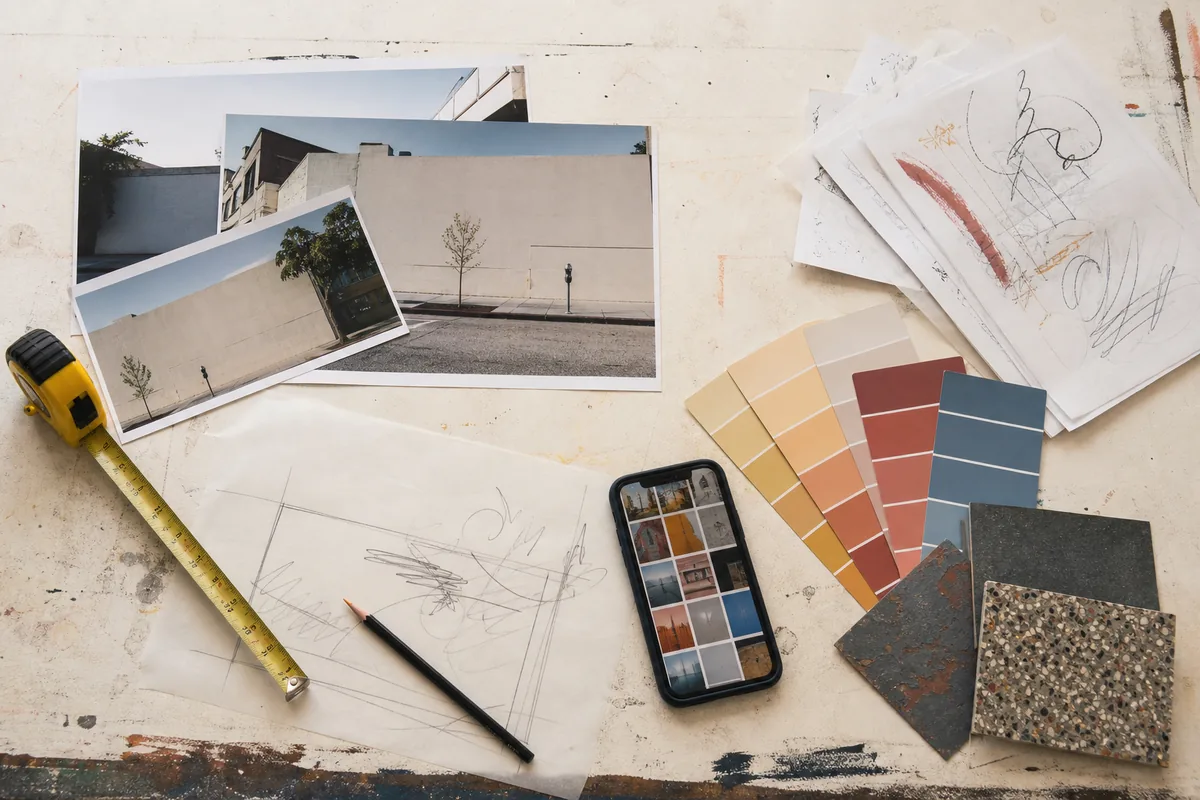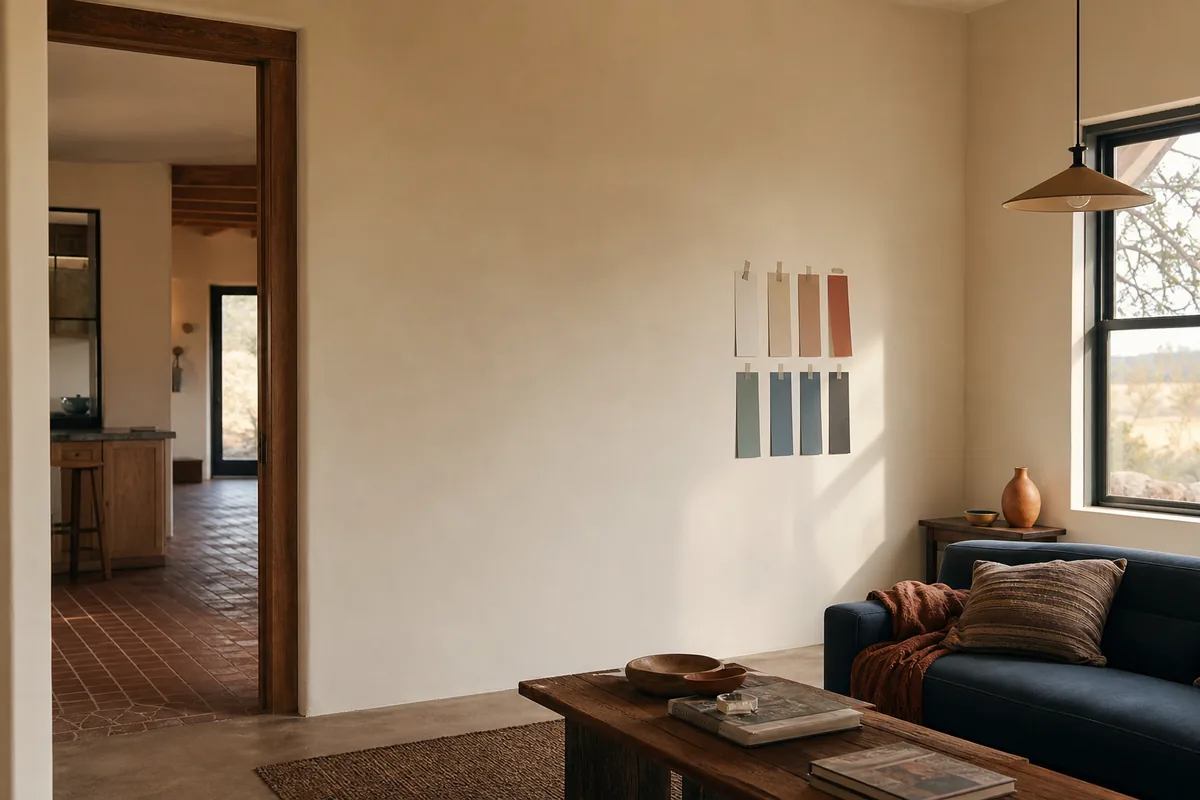
A good mural starts with useful decisions about the actual wall—not only an image in isolation. This guide gives you a practical way to prepare without turning an early conversation into a finished specification.
01
Begin with the wall’s job
A mural can welcome people, anchor a room, make a business easier to remember, add meaning to a home, or energize a wall that currently disappears. Decide which of those jobs matters most before comparing surfaces. A wall that looks impressive in a photo may be less useful if the intended audience rarely sees it.
Walk the normal route through the space. Note the first moment the wall becomes visible, how long it stays in view, and whether people see it straight on or at an angle. For a business, include the path from parking or the entrance. At home, consider the view from the doorway and the places where people naturally pause.
02
Read the proportions and interruptions
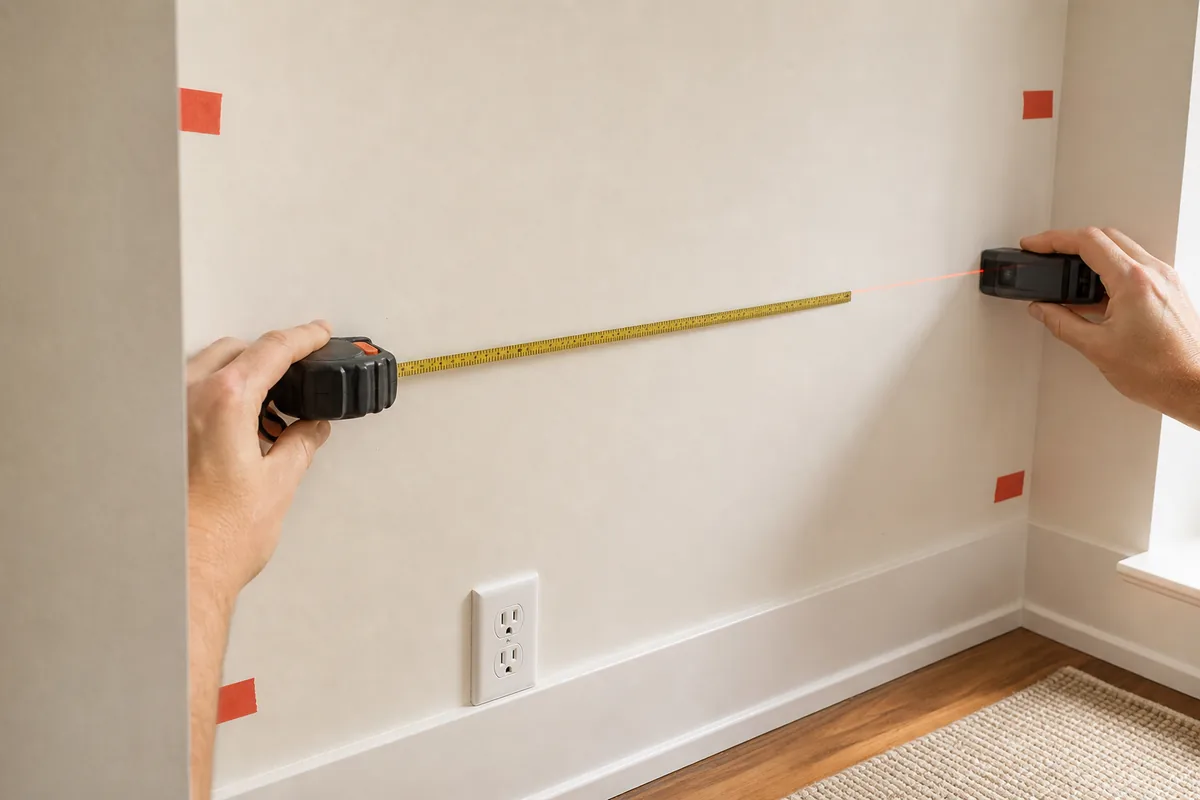
Width and height influence composition. A long, low wall supports a different rhythm than a tall narrow one. Doors, windows, vents, pipes, outlets, signs, furniture, landscaping, and changes in the wall plane can become constraints or deliberate parts of the design.
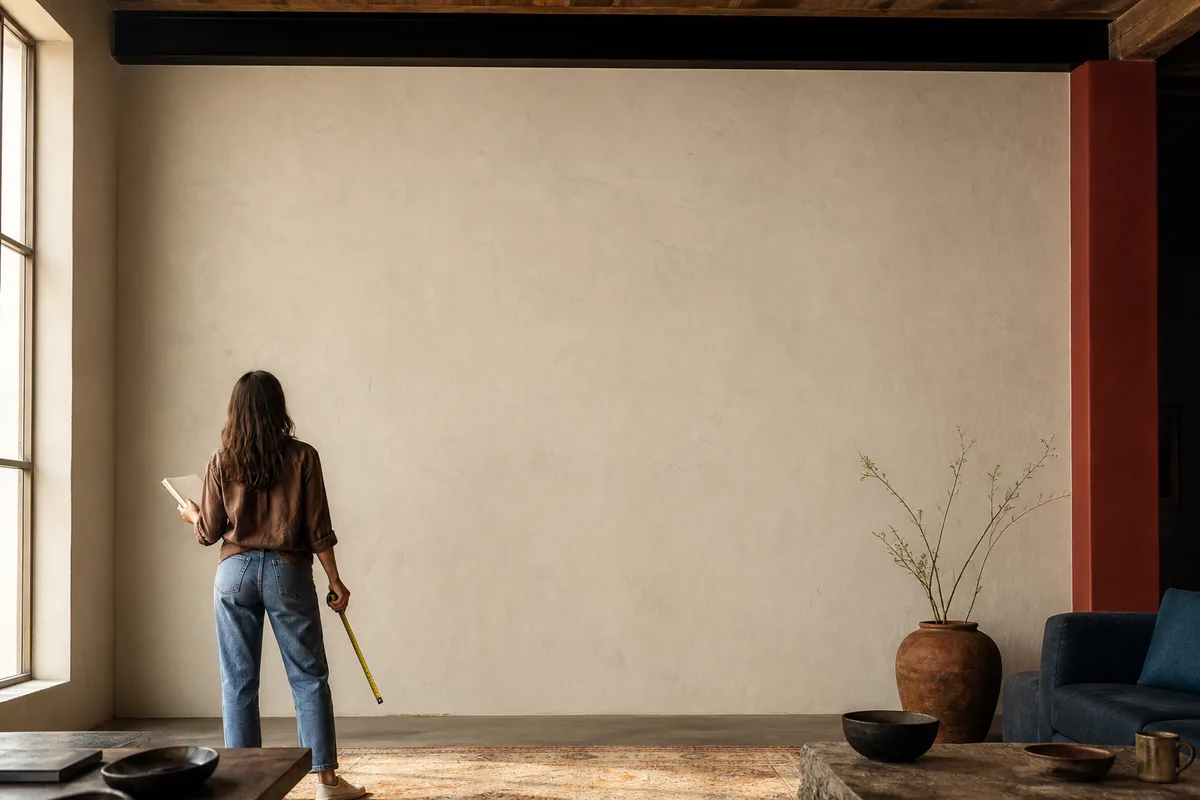
Take one photograph from straight on and several wider photographs that show the wall in context. Avoid relying on a tightly cropped image: it can hide the ceiling, floor, corners, access points, and nearby colors that affect the work.
- Mark elements that must remain visible or usable.
- Note furniture, signs, or displays that may move later.
- Include a person or familiar object in one photo for rough scale.
03
Watch the light and daily activity
Direct sun, deep shade, windows, overhead fixtures, and evening light can change how colors read. A wall beside a bright window may need a different value structure from a wall seen in dim ambient light. Exterior shadows can also move dramatically through the day.
Activity matters too. A high-traffic corridor, working kitchen, loading area, nursery, quiet lobby, and outdoor gathering space all place different demands on a mural. Share how the area is used, when it is busiest, and what needs to remain accessible.
04
Check condition and access before deciding
Look for peeling coatings, moisture staining, cracks, loose material, heavy texture, repairs, and changes in substrate. These observations do not diagnose a wall, but they help identify what should be evaluated before artwork is planned. Existing wall problems should be addressed appropriately rather than hidden by a design.
Finally, think about safe working space. Note stairs, slopes, narrow passages, fixed equipment, traffic, landscaping, or height. The best candidate balances visual purpose, a suitable surface, and workable access. When two walls remain, send both; the comparison is often more useful than choosing too early.