A good mural starts with useful decisions about the actual wall—not only an image in isolation. This guide gives you a practical way to prepare without turning an early conversation into a finished specification.
01
Show the wall and the space around it
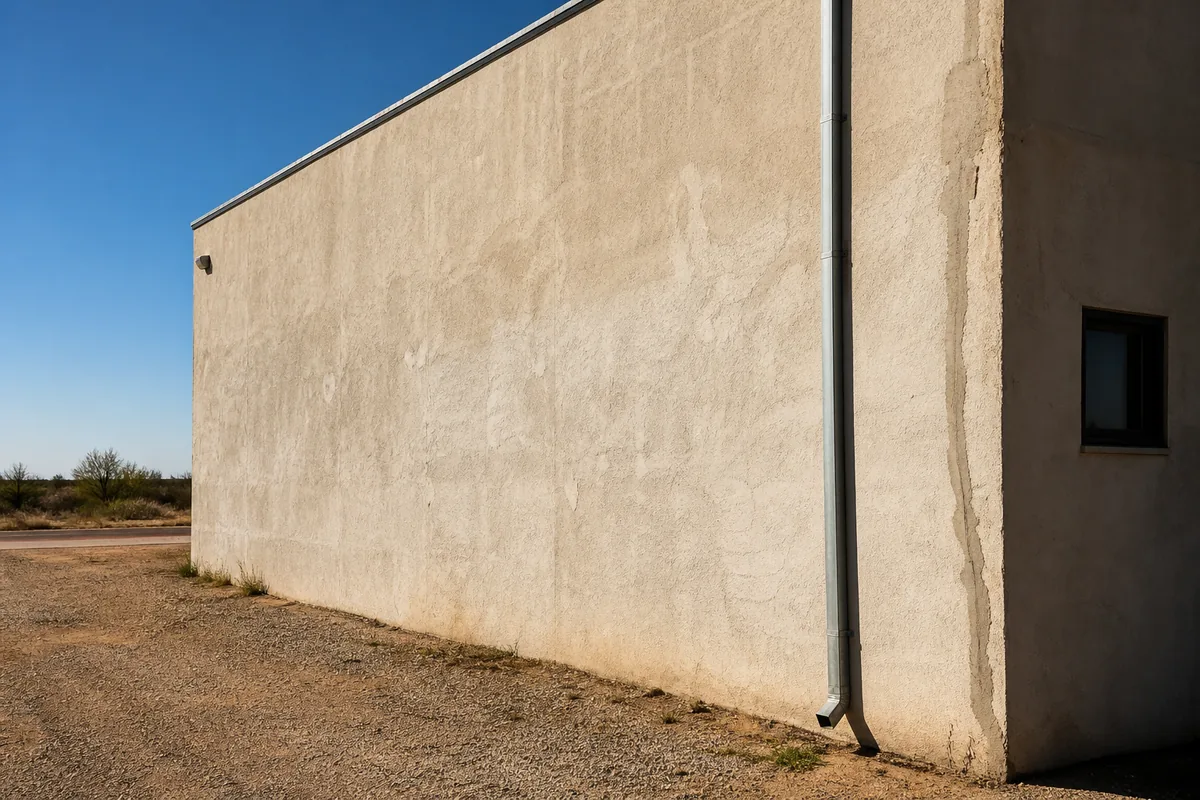
Begin with a clear straight-on photograph of the entire wall. Then step back and photograph the room, storefront, yard, corridor, or surrounding exterior from the places people normally approach. Context images reveal sightlines, obstructions, nearby colors, and working space that a close crop cannot.
Include detail photographs of cracks, texture, peeling coatings, patched areas, fixtures, corners, or anything unusual. Photos are an early planning aid, not a substitute for evaluating conditions, but they make the first discussion far more specific.
02
Add dimensions and location
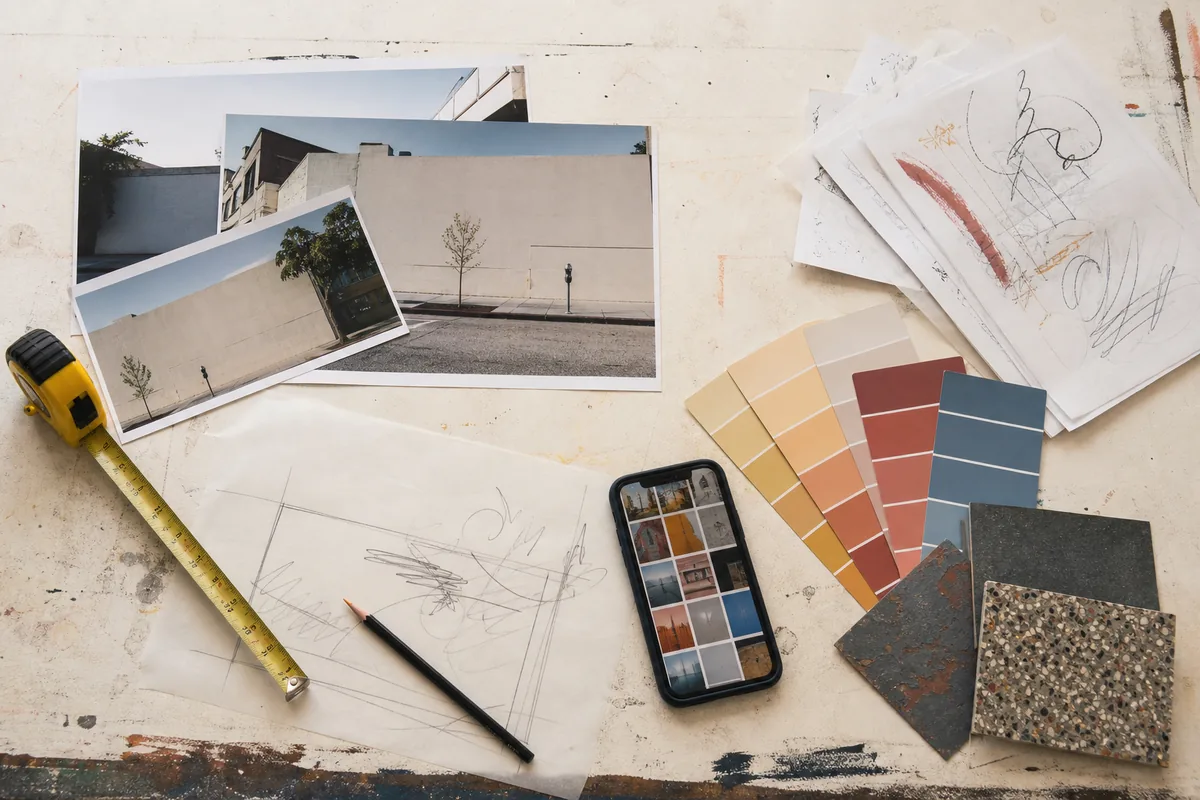
Provide the approximate width and height of the paintable area, along with the ceiling height or distance from the ground when relevant. Identify doors, windows, trim, or equipment that reduce the usable area. If you are unsure, send a simple sketch with measurements labeled clearly.
Include the project city and whether the wall is indoors or outdoors. For a service-area project, location helps qualify travel and scheduling without implying that a request is already accepted or booked.
- Wall width and height
- Height from floor or ground
- Dimensions of major interruptions
- Project city and indoor/outdoor setting
03
Explain the goal, not only the subject
“Desert plants” describes a subject; “a calm focal wall for a waiting room” describes a job. Both are helpful together. Say who uses the space, what you want them to feel or notice, and whether the mural should be bold, restrained, playful, branded, personal, or something else.
Reference images can show palette, density, line quality, realism, energy, or composition. Add a short note about what you like in each one so the references do not have to speak for themselves. References should guide a custom direction rather than request a copy of another artist’s work.
04
Be direct about timing and budget context
Share a preferred window and any real deadline, along with what creates that deadline. Also mention access limitations, business hours, other construction, move-in dates, or events that could affect planning. A preferred date is context, not a confirmed schedule.
Budget context helps match early ideas to a realistic scope. If you do not know a number, say so and identify your priorities: wall size, design detail, color, location, or a particular moment in the space. A complete first note does not need to be polished; it needs to be honest and easy to understand.