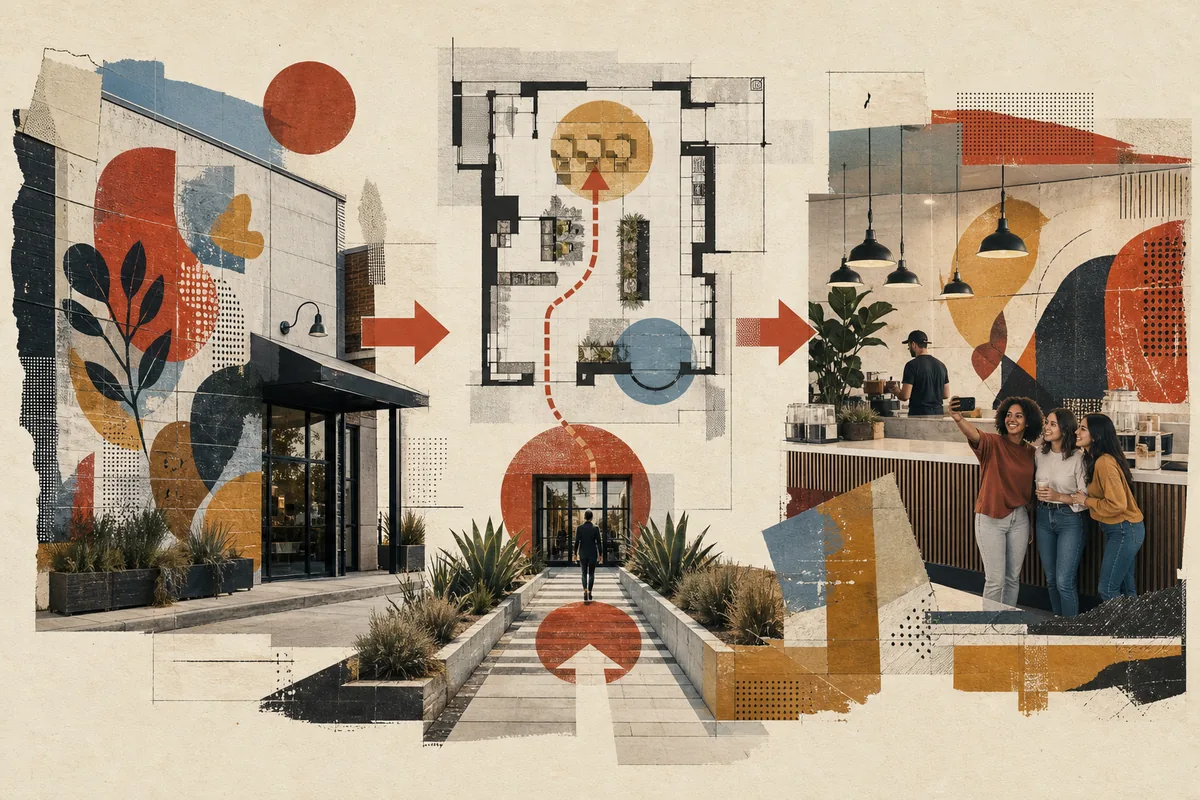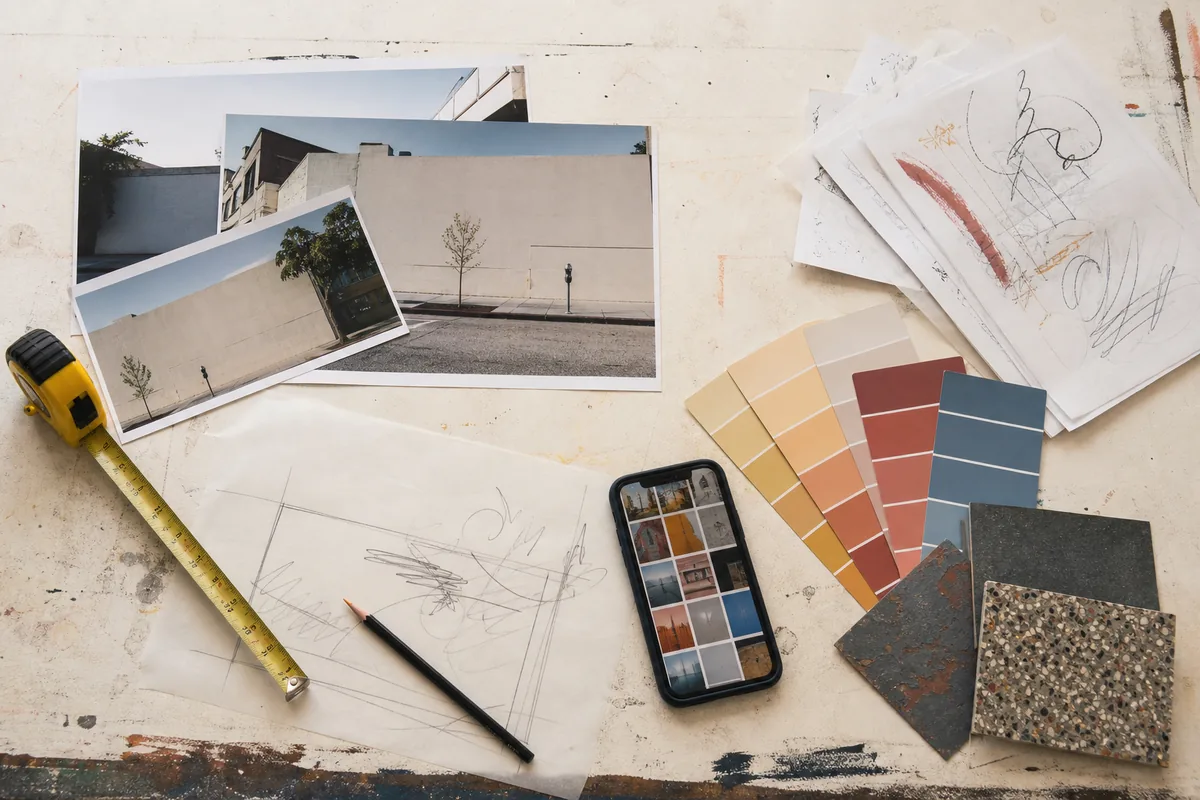
A good mural starts with useful decisions about the actual wall—not only an image in isolation. This guide gives you a practical way to prepare without turning an early conversation into a finished specification.
01
Study exposure over time
Exterior walls face sun, heat, wind, dust, rain, and temperature changes. Orientation and nearby structures affect how much exposure a wall receives. Photograph it at more than one time of day if shadows move across the surface or if reflected light is significant.
Visibility also changes. Note the direction of traffic, typical viewing distance, parked vehicles, open gates, seasonal landscaping, and signs that may cover part of the wall. A composition intended for passing drivers has different reading conditions from one beside a patio.
02
Look closely at the substrate
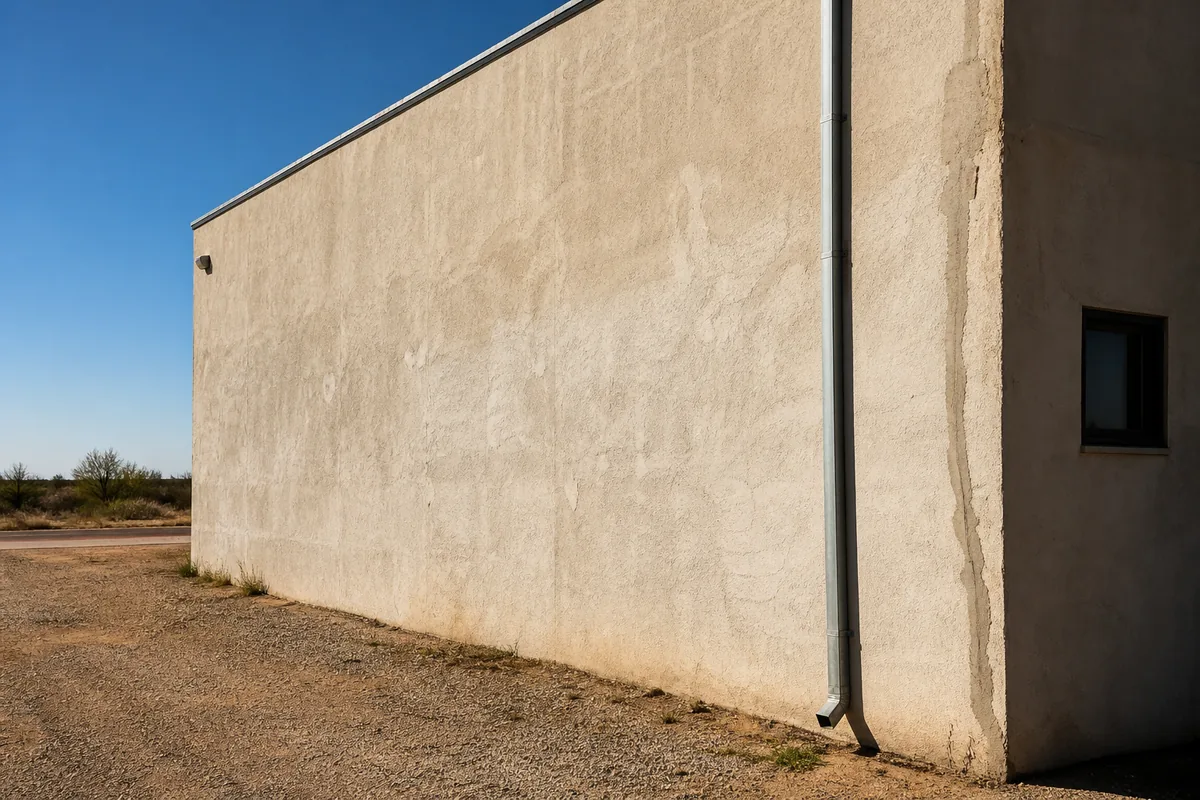
Identify whether the surface appears to be stucco, masonry, concrete, metal, wood, or another material, and photograph both the overall wall and close details. Existing coatings, heavy texture, patched areas, cracks, efflorescence, peeling, and staining are important early observations.
A mural should not be expected to repair an active building problem. Moisture sources, loose material, or other defects may need appropriate evaluation and correction before artwork moves forward. Describe any recent repairs or recurring issues you know about.
03
Show access, not just the canvas
Step back far enough to include the ground and space beside the wall. Share slopes, curbs, fences, planters, awnings, power lines, roof edges, alleys, equipment, and areas used by vehicles or pedestrians. Height and access conditions help define project feasibility and scope.
For an operating business or public-facing site, explain which areas must remain open and when activity is lowest. Any required site permissions or coordination should be identified early by the property decision-maker.
04
Compose for distance and context
Outdoor artwork competes with architecture, sky, signs, landscape, and motion. A clear silhouette, purposeful contrast, and deliberate focal point can matter more than small detail at a long viewing distance. Closer gathering areas may support more layered discoveries.
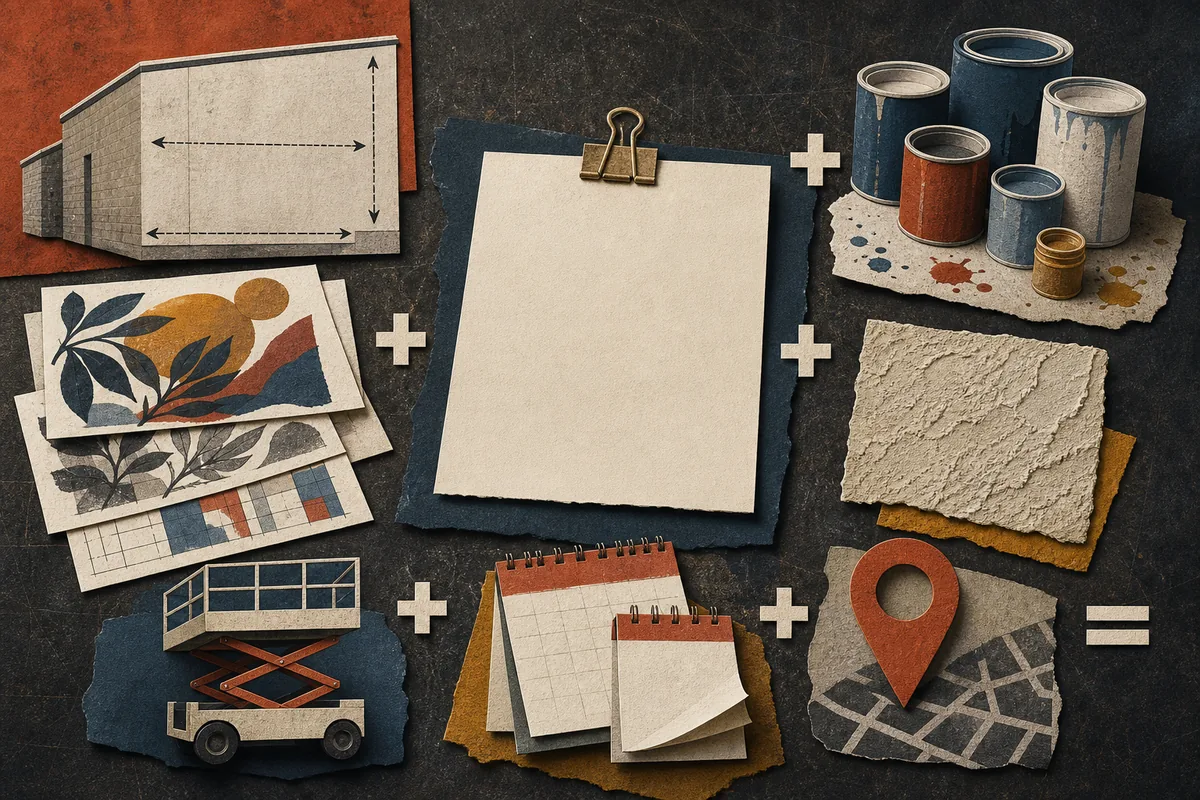
Send the project city, dimensions, surface photos, wide access views, exposure notes, goal, references, preferred timing, and budget context. Together, those details make an exterior inquiry far more useful than a single image of an empty wall.